
About Us
From Compassion to Global Impact
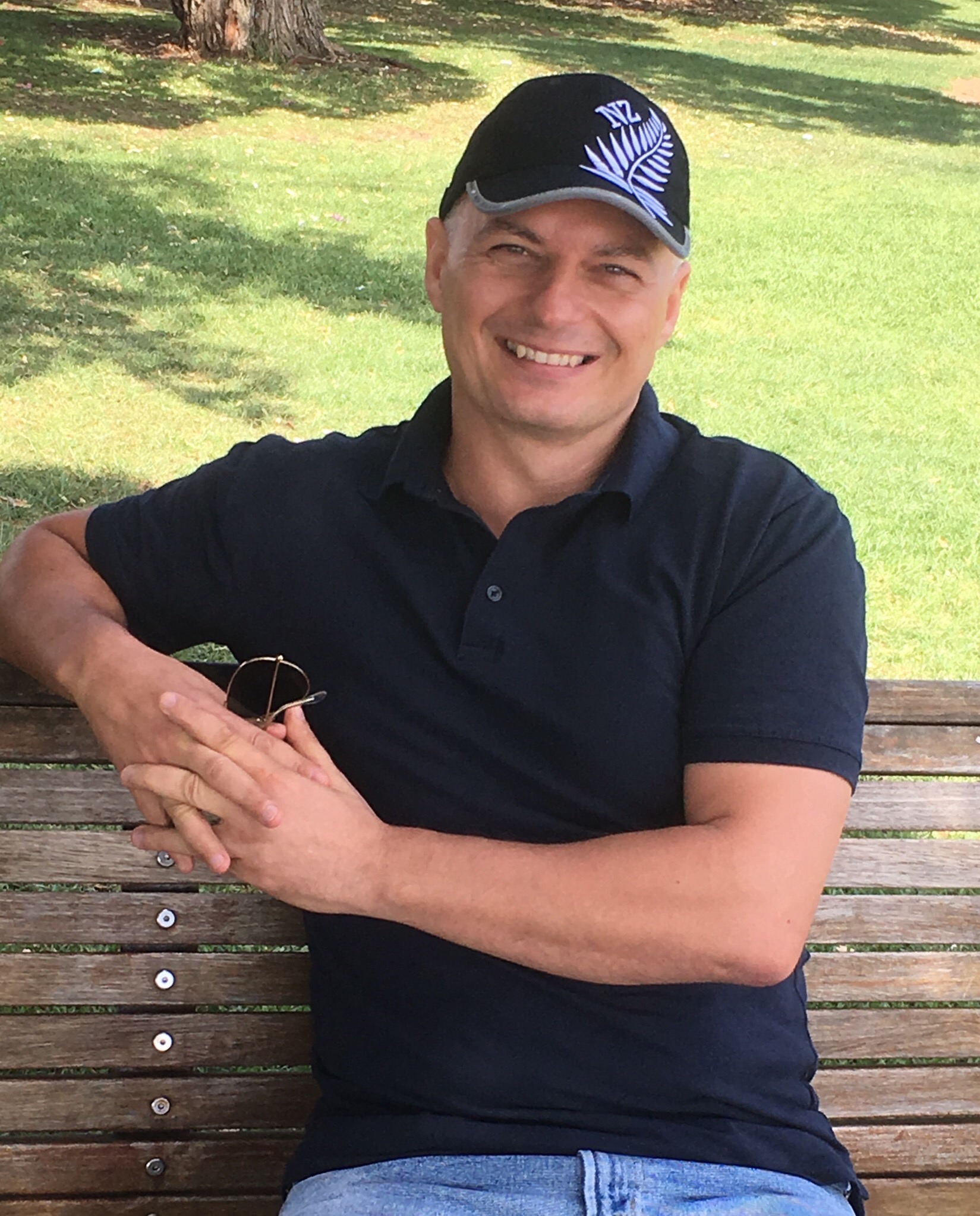
OptiRTP began where it mattered most: at home, with a son determined to help his father. When conventional medicine had no more answers for a serious health crisis, Bogdan Anich, OptiRTP’s Founder and Director, turned to what he knew best: physics, systems engineering and signal design. What began as an act of compassion became the work he has pursued ever since.
What he drew on had been years in the making. The signal engineering behind OptiRTP had been in development for more than fifteen years, and its origins were not in health at all, but in energy and the environment. In the years Bogdan spent reducing engine emissions, he had observed something unexpected: a biological effect that the same signal engineering appeared to produce in living systems. That observation, made during emission-reduction trials, was a starting point, not a shortcut.
From there, the work evolved over a decade of dedicated research, engineering and real-world testing. It took years of biophysics research and development (millions of data points, advanced analytics, and analysed feedback and medical-diagnostic data from beta users) to turn a single observation into a repeatable, refined system, and to turn it fully toward human health. OptiRTP began.
Those early experiments became what is now Optimum Bio Sound Therapy (OBST), a sound-based digital therapeutic designed to support the body’s natural regulatory systems. OBST is registered with the U.S. FDA as a Class I medical device (510(k)-exempt) and notified to New Zealand’s Medsafe - a technology born from care, developed through rigorous science, and refined through real-world use.
Leadership with Purpose
When Jon Doherty, now OptiRTP’s Chief Executive Officer, first encountered OBST, it wasn’t through a business meeting; it was through family. In 2017, while searching for ways to bring his father comfort during terminal cancer, Jon was introduced to Bogdan’s early work. The experience, and what it meant to his family during that time, stayed with him.
That experience changed Jon’s life, and his leadership. It gave him a deep understanding of what this technology can mean for people in need, and it’s that same sense of purpose that drives the company today as it prepares to scale globally.
Together, Bogdan and Jon lead a team that spans science, medicine, performance, and technology, a purpose-driven group united by a single belief: that healthcare can be both accessible and profoundly human.
Who We Are
We are engineers, scientists, clinicians, and performance specialists, but above all, we are people who care deeply about improving lives. We believe in evidence-based innovation, not hype. We believe technology should fit quietly into daily life, not disrupt it. We believe affordable, scalable healthcare is both a moral and scientific responsibility.
From our roots in New Zealand’s high-performance sport community to our partnerships with medical researchers and global advisors, every member of our team shares one purpose: to help people recover better, live better, and feel more in control of their health.
Where We’re Headed
OptiRTP is established in New Zealand and is now expanding into the United States, with planned entry into Japan to follow, building a global ecosystem of subscribers, research partners, and healthcare professionals. Our next chapter is centred on the United States, where we are leading with high-performance sport to leverage the solid foundation we have developed here in New Zealand. It is a fast, direct path to real-world adoption, and it opens the research and clinical pathways that follow from it.
Evidence leads everything we do. We are pursuing independent pilots focused on sleep and pain, ahead of a randomised controlled trial. These studies will measure real-world outcomes in sleep and pain through both objective biometric monitoring and subjective, patient-reported measures, and track healthcare-utilisation and medication-usage trends to support future reimbursement pathways. This work underpins a planned FDA De Novo pathway to reclassify OBST as a Class II device (in preparation; not yet filed or cleared): the route toward authorised, reimbursable use funded by insurers and public payers, such as Medicare and the Department of Veterans Affairs, rather than the individual.
Our research horizon reaches beyond sport to the people and settings where recovery matters most. These include veterans’ health and supporting patients’ tolerance of demanding treatments such as chemotherapy, pursued step by step, as the evidence is built.
To reach global scale without compromising medical-grade precision or regulatory compliance, we are developing a next-generation delivery system: an improved OBST application and custom-engineered earbuds to make one-to-one care more automated and scalable, ahead of a secure one-to-many broadcast architecture designed to deliver the same therapy to many people at once.
Our end in mind is simple yet ambitious: to bring affordable, evidence-based medical-device technology to the world, so that what began as a son’s act of compassion can one day help millions.
